
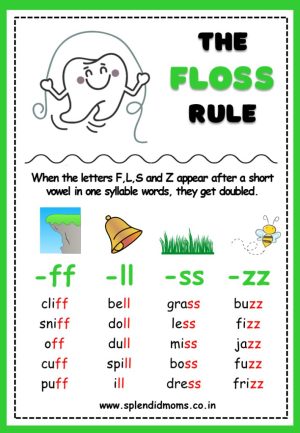
The ‘floss rule’ is a handy spelling tip that can help you determine when to double the final consonant before adding a suffix. For example, in words like “swim” and “wrap,” the final consonant is doubled before adding -ing or -ed. This simple rule can make a world of difference in perfecting your spelling skills. Let’s dive deeper into how the ‘floss rule’ works and how you can apply it effortlessly in your writing. Mastering this rule will undoubtedly enhance your spelling prowess!

The Magic of the Floss Rule: A Fun Way to Improve Your Spelling
Hello, young word wizards! Have you ever heard of the mysterious Floss Rule? No, it’s not about dancing with dental floss—it’s a super cool spelling trick that can help you spell words correctly every time! In this blog post, we are going to dive deep into the world of the Floss Rule and uncover its secrets. Get ready to unlock the magic of spelling with this simple yet powerful rule!
What is the Floss Rule?
Let’s start with the basics. The Floss Rule is a handy spelling rule that helps us know when to double the final consonant of a word before adding a suffix. It may sound a bit tricky at first, but trust me, once you understand it, spelling words will become a piece of cake!
Imagine you have a word that ends with a single consonant, like ‘hop.’ Now, if you want to add a suffix that begins with a vowel, such as ‘ing’ to make ‘hopping,’ you need to follow the Floss Rule and double that final consonant. So, ‘hop’ becomes ‘hopp’ before adding ‘ing,’ making it ‘hopping.’
The Floss Rule is like a secret code that helps us spell words correctly and makes them look neat and tidy. Let’s explore some more examples to see the Floss Rule in action!
Examples of the Floss Rule
1. Run + ing = running: Without the Floss Rule, it would be ‘runing,’ which looks a bit strange, right? But thanks to the Floss Rule, we double the ‘n,’ making it ‘running.’
2. Stop + ed = stopped: Imagine if we didn’t follow the Floss Rule here—it would be ‘stoped,’ which doesn’t look quite right. By doubling the ‘p,’ we get the correct spelling, ‘stopped.’
3. Plan + er = planner: If we ignored the Floss Rule, it might be ‘planer,’ but by doubling the ‘n,’ we get the proper spelling, ‘planner.’
See how easy it is to use the Floss Rule to spell words correctly? It’s like having a superpower for spelling!
Why Does the Floss Rule Work?
Now, you might be wondering, why do we even need the Floss Rule? Well, the Floss Rule helps us preserve the original sound of the word when we add a suffix. By doubling the final consonant, we keep the vowel short and maintain the word’s pronunciation. It’s all about making sure our words sound right and look right!
Think of it as a way to keep our words tidy and organized. Just like tidying up your room to find things easily, following the Floss Rule helps us keep our words neat and easy to read.
Practicing the Floss Rule
Practice makes perfect, right? The more you practice using the Floss Rule, the better you’ll become at spelling words correctly. Here are a few fun activities you can try to master the Floss Rule:
1. Word Sorting:
Grab a bunch of words that follow the Floss Rule and some that don’t. Sort them into two groups and see if you can spot the difference. This way, you’ll train your eyes to recognize when to double the final consonant.
2. Floss Rule Bingo:
Create a bingo card with words that require the Floss Rule. Call out the base word, and players have to mark the correct spelling with the doubled consonant. The first one to get a bingo wins!
3. Story Writing:
Write a short story using words that follow the Floss Rule. Challenge yourself to include as many correctly spelled words as possible. Not only will you practice the rule, but you’ll also have a blast creating your own tale!
The Floss Rule in Action
Now that you understand the Floss Rule, let’s see it in action with some more examples. Practice spelling these words using the Floss Rule:
– Swim + ing = __________
– Chat + ed = __________
– Rob + er = __________
Have fun using the Floss Rule to spell these words correctly!
Unlocking the Power of Spelling
Congratulations, young spellers! You’ve unlocked the magic of the Floss Rule and discovered a fantastic way to improve your spelling skills. Remember, practice is the key to mastering this rule, so keep exploring words and challenging yourself with new spellings.
With the Floss Rule by your side, spelling will no longer be a mystery but a fun adventure waiting to be explored. So, go ahead, spell with confidence, and amaze everyone with your impeccable spelling skills!
Stay tuned for more spelling tips and tricks to become the ultimate word wizard! Happy spelling!
Ze Floss Rule 🎉GRAMMAR and SPELLING for Kids📝 Superlexia ⭐ Episode 14
Frequently Asked Questions
What is the floss rule in English language pronunciation?
The floss rule in English language pronunciation states that when a word ends with a single vowel followed by one consonant, the consonant is usually doubled before adding a suffix that begins with a vowel sound.
How does the floss rule apply when adding suffixes to words?
When adding suffixes to words that follow the floss rule, such as “run” becoming “running,” the final consonant is doubled to maintain the short vowel sound in the original word before adding the suffix.
Can you provide examples of words that follow the floss rule?
Examples of words that follow the floss rule include “stop” (stopping), “tip” (tipped), and “forget” (forgetting), where the final consonant is doubled when adding the suffix.
Final Thoughts
In conclusion, the ‘floss rule’ is a valuable tool for improving writing clarity. Applying this rule ensures that every sentence includes a subject and a verb, making the message clear and concise. By following the ‘floss rule,’ writers can enhance the readability and impact of their content. Mastering this rule will help you communicate effectively and engage your audience effortlessly.