
Archives

Ultimate Sat Formula Sheet Guide: Master Exam Prep

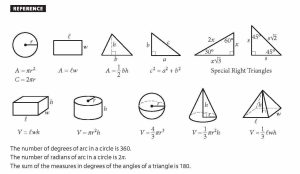
The SAT formula sheet is a powerful tool for success on the exam. It provides quick access to essential equations, boosting your problem-solving efficiency. Need to find the area of a circle or calculate the slope of a line? The SAT formula sheet has got you covered. With this handy resource at your fingertips, you can tackle math questions with confidence and precision. Master the formulas, and conquer the SAT. Get ready to excel!

Ultimate SAT Formula Sheet Guide: Master Exam Prep


The Ultimate Guide to the SAT Formula Sheet: A Key to Mastering the Math Section

Welcome, future SAT math wizards! If you’re gearing up to tackle the SAT, then you’re in the right place. Today, we’re going to dive deep into the essential tool that can make all the difference in your math score – the SAT formula sheet. This magical document is your key to unlocking success in the math section of the SAT exam. So, let’s roll up our sleeves and explore everything you need to know about the SAT formula sheet!

What is the SAT Formula Sheet?

First things first, let’s talk about what exactly the SAT formula sheet is. The SAT formula sheet is a handy reference guide that contains all the important formulas and equations you need to know for the math section of the SAT exam. It covers a wide range of topics, from algebra and geometry to trigonometry and statistics. Having this sheet by your side during the test can help you solve problems more efficiently and accurately.

Key Sections of the SAT Formula Sheet

Now, let’s break down some of the key sections you’ll find on the SAT formula sheet:

Algebra

Algebra is a big part of the SAT math section, so it’s no surprise that the formula sheet includes various algebraic formulas. You’ll find equations for calculating slopes, finding the equation of a line, solving systems of equations, and more. These formulas can come in handy when you’re dealing with algebraic problems on the test.

Geometry

Geometry is another important area covered on the SAT, and the formula sheet has got you covered with all the essential geometry formulas. Whether you need to find the area of a triangle, calculate the volume of a cylinder, or determine the properties of different shapes, the geometry section of the formula sheet has everything you need.

Trigonometry

Trigonometry can be a challenging topic for many students, but fear not – the SAT formula sheet includes trigonometric functions and identities to help you navigate through trigonometry problems with ease. From sine and cosine to tangent and cotangent, the trigonometry section of the formula sheet is your go-to guide for trigonometric calculations.

Statistics

Statistics is a crucial part of the SAT math section, and the formula sheet provides you with the necessary formulas for working with data sets, calculating probabilities, and interpreting statistical graphs. Whether you’re dealing with mean, median, mode, or standard deviation, the statistics section of the formula sheet has got your back.

How to Use the SAT Formula Sheet Effectively

Now that you know what’s included in the SAT formula sheet, let’s talk about how you can make the most of this valuable resource during the test:

Familiarize Yourself with the Formulas

Before the test day, take the time to go through the SAT formula sheet and familiarize yourself with the formulas and equations it contains. Practice using them in different types of math problems so that you feel comfortable applying them under pressure during the exam.

Practice, Practice, Practice

Practice makes perfect! Make sure to incorporate the formulas from the SAT formula sheet into your study sessions. Solve practice problems and mock tests using the formulas to strengthen your understanding and improve your problem-solving skills.

Use the Formula Sheet Strategically

During the test, use the SAT formula sheet strategically. Refer to it whenever you encounter a math problem that requires a specific formula or equation. Remember, the formula sheet is there to assist you, so make sure to leverage it to your advantage.

And there you have it – the ultimate guide to the SAT formula sheet! By mastering the formulas and equations on this essential resource, you’ll be well on your way to conquering the math section of the SAT exam. Remember to practice regularly, familiarize yourself with the formulas, and use the formula sheet strategically during the test. With dedication and perseverance, you can boost your math score and achieve your desired results on the SAT. Good luck, future math whizzes!


All of SAT Math Explained in 26 Minutes

Frequently Asked Questions

What information is included in the SAT formula sheet?

The SAT formula sheet provides important mathematical formulas and equations that are relevant to the types of problems students will encounter on the test. It includes formulas for geometry, algebra, statistics, and trigonometry, as well as other key mathematical concepts.

How can I access the SAT formula sheet during the test?

Students do not need to bring their own formula sheet to the SAT test. The necessary formulas and equations are provided within the test booklet itself. You will be able to refer to the formula sheet whenever needed during the math sections of the test.

Do I need to memorize all the formulas on the SAT formula sheet?

While it’s helpful to be familiar with the formulas provided on the SAT formula sheet, you do not need to memorize all of them. Understanding the concepts behind the formulas and knowing how to apply them in different problem-solving situations is more important than rote memorization.

Final Thoughts

In conclusion, the SAT formula sheet is a valuable tool for test-takers, providing essential equations and formulas for success. By familiarizing yourself with the formulas and practicing using them, you can improve your efficiency during the exam. Remember to refer to the formula sheet when needed, but also focus on understanding the concepts behind the formulas. Utilize the SAT formula sheet as a resource to enhance your problem-solving skills and boost your overall performance on the test.